

A pallet rack can look perfectly fine from the end of an aisle.
Walk closer, though, and you may notice something different.
A slightly bent upright. A missing safety clip. An anchor that has worked loose. A beam carrying more weight than the configuration was designed to support.
Some problems are easy to miss until you look closely. That's one of the reasons regular pallet rack inspections matter. Damage can develop gradually, particularly in busy warehouses where forklifts, pallets and people are moving through the same areas every day.
A good inspection checklist gives warehouse teams a consistent way to look for those problems, record what they find and make sure issues don't disappear into the background of a busy operation.
It shouldn't be treated as paperwork for its own sake.
The point is to make it easier to notice something, act on it and keep a record of what happened.
What Should a Pallet Rack Inspection Checklist Cover?
A useful checklist should reflect the parts of the racking system that can affect its condition and safe operation. That includes the structural components, the loads being stored and the conditions around the racking.
For example, an inspection might look at:
- beams and beam connections
- uprights and footplates
- bracing
- anchors and floor fixings
- safety clips
- rack load signs
- pallets and stored loads
- signs of impact from forklifts or other equipment
- changes to the original rack configuration
- previous damage that has not yet been resolved
The exact checklist will depend on the racking system and the way it is being used. A warehouse handling standard pallets won't necessarily have the same inspection requirements as one using specialised racking or different load configurations.
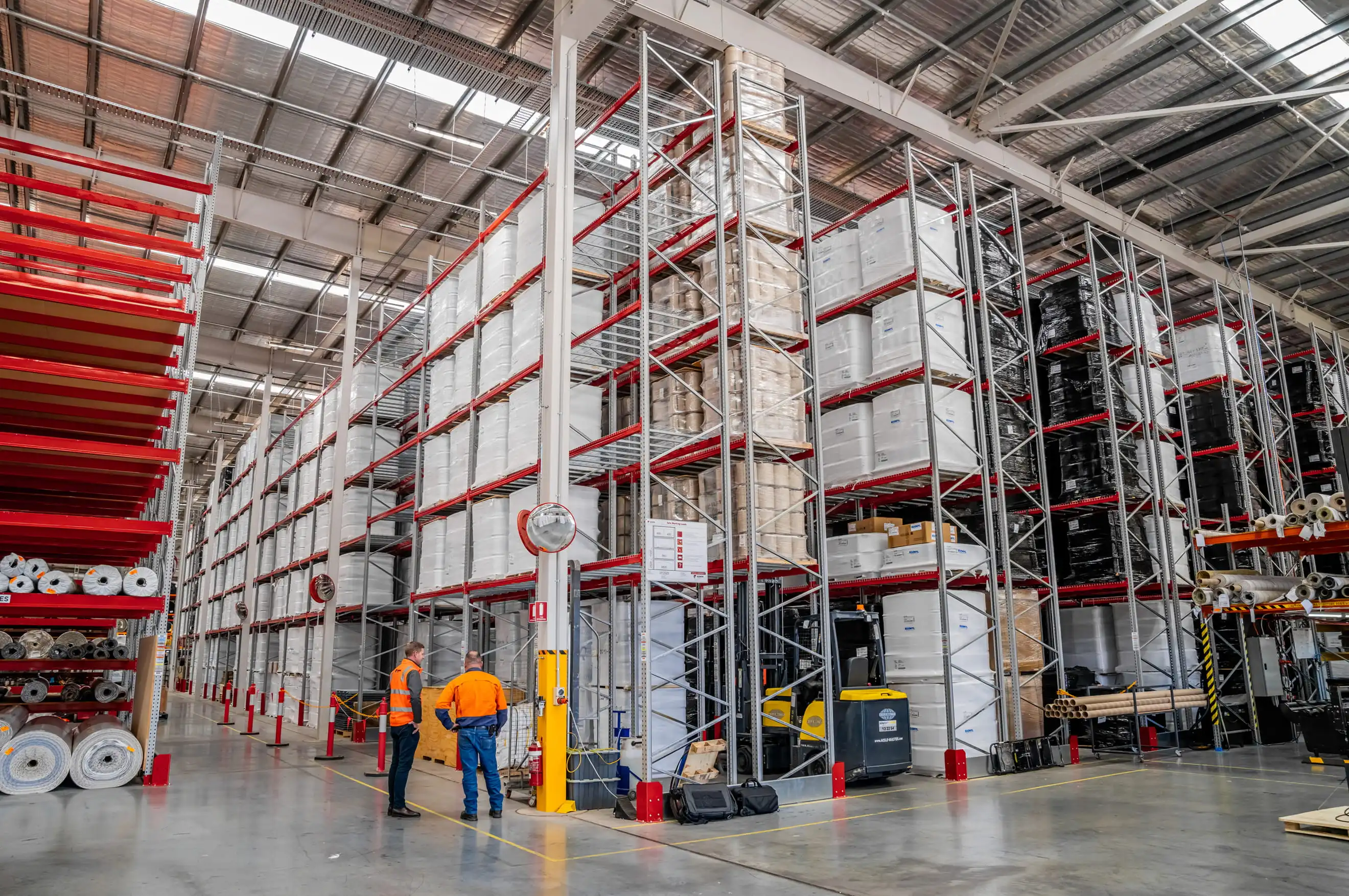
Start With the Parts Most Likely to Be Damaged
In a working warehouse, impact is one of the first things worth looking for.
Forklifts and other handling equipment operate close to racking every day. A small collision may leave a mark that seems insignificant at the time, but damage to a structural component should not simply be ignored.
Look for bent or damaged uprights, beams or braces. Check whether footplates or floor fixings appear damaged. Look at beam connections and safety clips. If a beam has been hit, don't assume that minor-looking damage means the rack is still safe to use.
Damaged racking components should be assessed promptly and repaired or replaced where required. Workers should also report damage as soon as it is identified so it can be inspected and assessed.
The checklist helps identify a potential problem. It doesn't give the person completing it permission to decide that structural damage is acceptable.
Check That the Rack Still Matches Its Intended Configuration
Racking doesn't necessarily stay exactly as it was installed.
A warehouse may add or remove beams, change storage levels, introduce different pallets or change the products stored in a particular bay.
Those changes can create problems if the racking is no longer being used in the configuration for which it was designed.
During an inspection, check whether the rack still matches its approved configuration and whether load signs remain visible and legible.
National Safe Work guidance emphasises that rack load signs should clearly show rated capacities and that rack configurations should not be altered without appropriate consideration. The maximum unit load and total rated capacity of each bay must not be exceeded.
This is where an inspection becomes more than a search for visible damage.
A rack can be physically intact and still be being used incorrectly.
Look at What Is Sitting on the Rack, Too
The racking isn't the only thing being inspected.
The load matters.
Pallets should be suitable for the racking and the way they're being used. Products shouldn't be positioned in a way that creates instability or places loads outside the intended support area.
It's also worth checking whether the warehouse has changed the type or size of pallets being used.
Changes in pallet design can also affect how loads interact with racking. Pallets that are too large can overlap or push other pallets from their supports, while pallets that are too small may create a risk of dropping through the rack.
The same thinking applies to the products themselves.
Overhanging cartons, loose loads or goods that have shifted on a pallet may create risks even when the rack structure itself looks undamaged.
A good checklist therefore needs to look at the relationship between the rack and the load, not just the steel components.
Don't Forget the Area Around the Racking
Sometimes the surrounding area tells you more than the rack itself.
Are forklifts regularly coming too close to the uprights?
Is pedestrian traffic moving through areas where it shouldn't?
Are aisles being used for temporary storage?
Are damaged pallets being left where they could interfere with normal warehouse movement?
The condition of the surrounding work area can tell you something about why damage is occurring in the first place.
National Safe Work guidance recommends managing risks associated with handling equipment, mobile plant and pedestrian movement, including maintaining appropriate aisle and access arrangements.
If the same upright keeps getting hit, replacing the upright may solve the immediate problem.
It may not solve the reason it keeps happening.
Turn the Checklist Into an Action List
This is where inspection records become useful.
Finding a problem is only the first step. The inspection should make it clear what happens next.
A practical checklist can include fields for:
- Location: Which aisle, bay or rack is affected?
- Issue identified: What was observed?
- Severity or priority: Does the issue require immediate action?
- Action taken: Was the area isolated, the load removed or another control put in place?
- Person responsible: Who is following up?
- Date: When was the issue identified and when was it resolved?
- Follow-up: Does the issue need further assessment or repair?
What matters is that the record makes it difficult for an unresolved issue to become invisible.

How Often Should Pallet Racking Be Inspected?
There isn't one inspection that replaces everything else.
Routine checks can help warehouse teams identify obvious damage as it occurs, while more formal inspections provide a structured assessment of the racking's condition.
Pallet racking should be inspected regularly, with formal inspections carried out by a competent person at appropriate intervals. For a more formal assessment, warehouse racking inspections can provide a structured review of damage, load signage, structural components and other safety considerations.
The important point is not to interpret the 12-month interval as a reason to wait 12 months before looking at the racking.
If a forklift hits an upright today, the next formal inspection date doesn't matter.
The damage needs to be reported and dealt with when it happens.
The inspection process should also reflect changes in the warehouse. New equipment, altered layouts, new pallet types or changes in work practices can all be reasons to review how risks are being managed.
What Happens When a Problem Is Found?
Not every finding can be treated the same way.
A missing safety clip and a visibly damaged upright may both appear as tick boxes on a checklist, but the appropriate response can be very different.
The person carrying out the inspection should follow the warehouse's established process for reporting and controlling unsafe conditions. Serious hazards should be addressed promptly, and damaged racking should be assessed by someone competent to determine the appropriate action.
That might mean taking a section out of service, unloading a damaged bay, arranging a repair or replacement, or investigating why the damage occurred.
The important thing is that the checklist doesn't become the final step.
A tick in the "issue identified" column isn't a resolution.
It's the point where the next action begins.
A Checklist Should Evolve With the Warehouse
Over time, inspection records can also show patterns.
If the same aisle repeatedly records forklift impacts, that's worth investigating. If particular components keep being damaged, there may be a problem with traffic flow, rack protection, operating practices or the way goods are being handled.
The checklist then becomes more than a compliance record.
It becomes a way of seeing what is happening across the warehouse.
Keep the Checklist Practical
There is no benefit in having a detailed inspection form that nobody uses properly.
A practical checklist should be easy to follow, specific enough to identify meaningful issues and connected to a clear process for reporting and resolving problems.
It should also sit alongside the manufacturer's requirements, the relevant AS 4084 steel storage racking standards and the warehouse's own safety procedures. AS 4084.1:2023 Steel storage racking, Design and AS 4084.2:2023 Steel storage racking, Operation and maintenance provide relevant requirements for the design, operation and maintenance of pallet racking.
The goal isn't to create another document that sits in a folder. The inspection process also needs to reflect the type of Pallet Racking systems in use, since different configurations, loads and operating conditions can create different considerations.
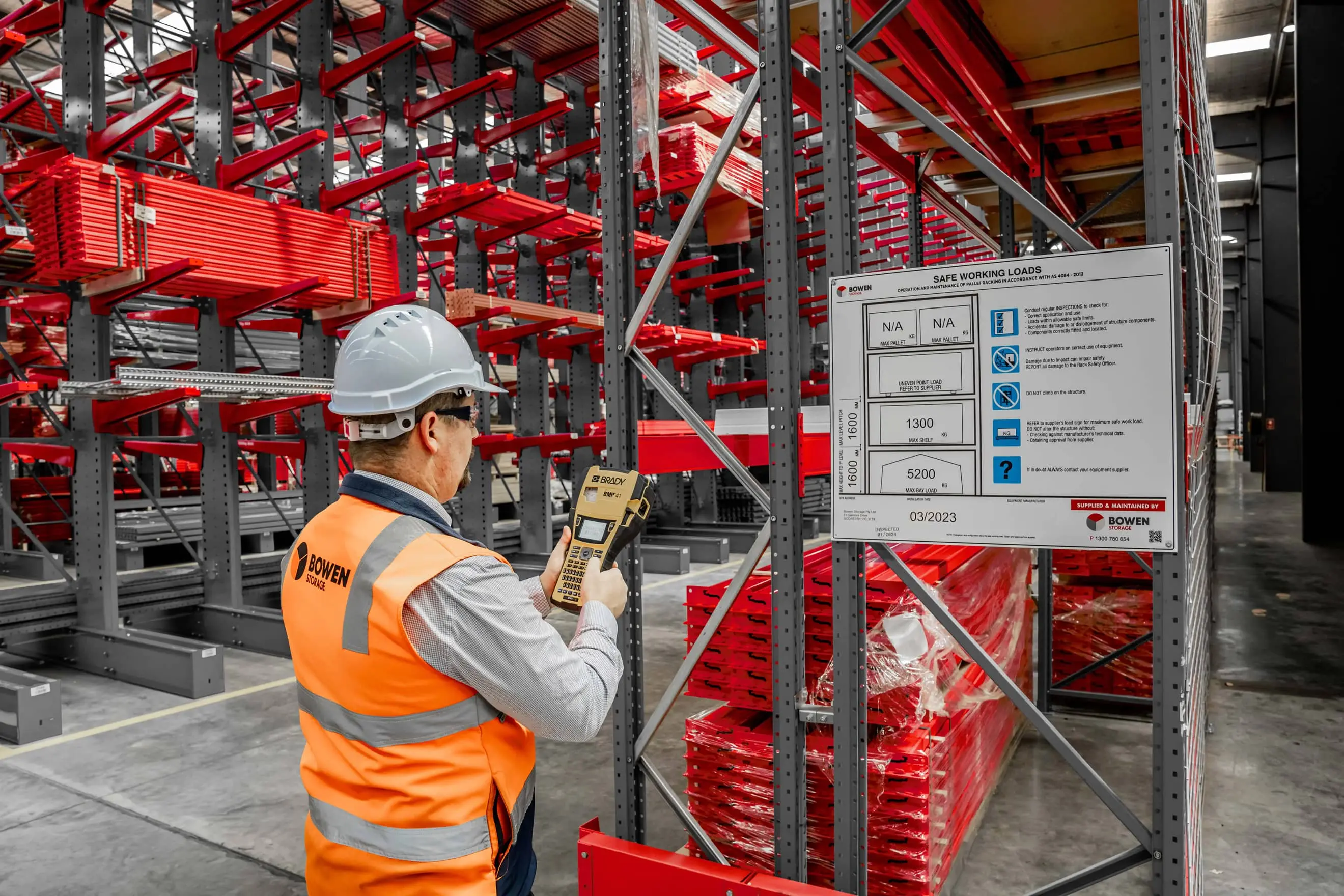
A Good Inspection Process Makes Problems Easier to See
The checklist gives warehouse teams a consistent way to record those observations, but the real value comes from what happens afterwards.
When inspections are regular, findings are documented and issues are followed through to resolution, warehouse operators have a much clearer picture of the condition of their racking and the risks that need attention.
If you're reviewing the condition of your Pallet Racking or need a closer look at your current storage setup, Bowen Storage can help assess your requirements and identify practical next steps.