

When a warehouse starts feeling cramped, the conversation usually turns to one thing: more space.
Sometimes that's the right decision. Quite often, it isn't.
We've walked through warehouses where people were convinced they'd outgrown the building, only to find that the biggest obstacle wasn't the footprint. It was the way the operation had evolved over time. New product lines had been squeezed into old layouts. Fast-moving stock had drifted further from dispatch. Temporary storage had quietly become permanent. None of those changes looked like a problem on their own. Together, they quietly changed the way the warehouse worked.
Before investing in a larger facility, it's worth asking a different question: could your current warehouse simply work better? As operations evolve, improving the way your warehouse functions can be just as important as growing your business.
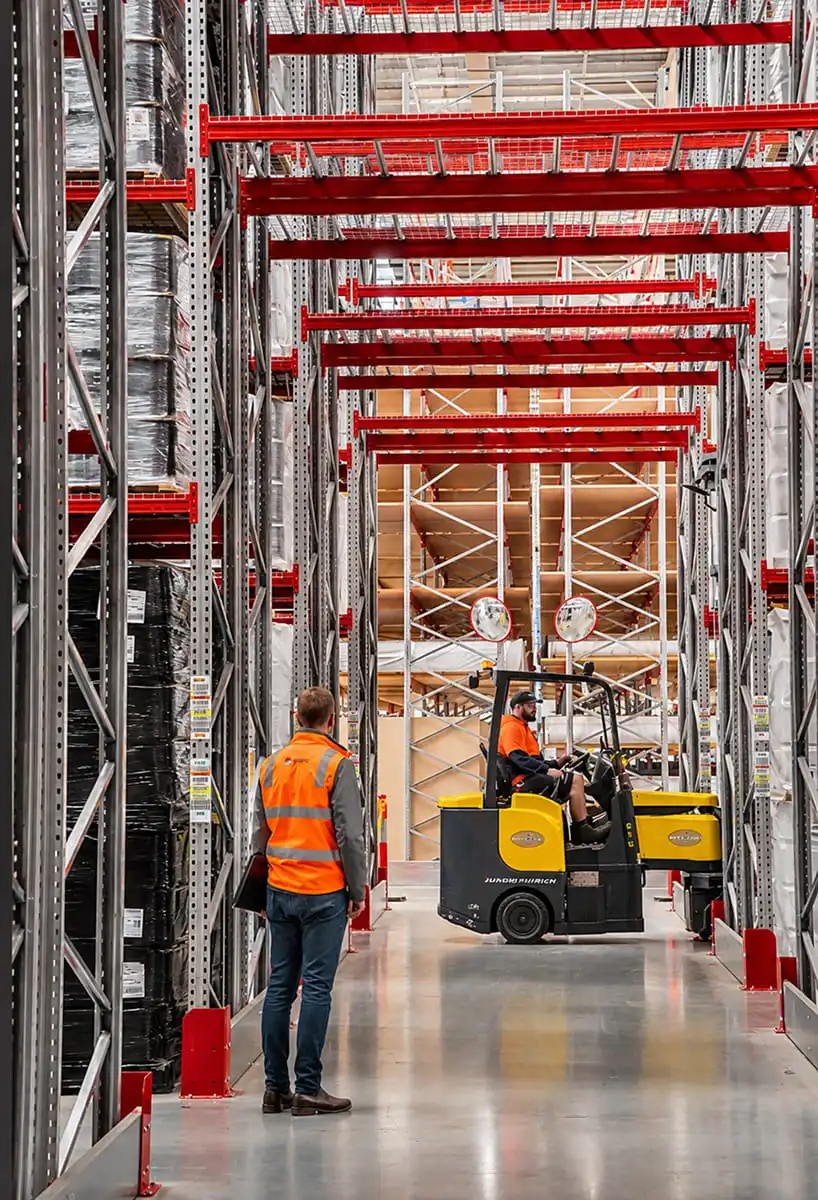
Follow the Movement, Not Just the Storage
If you want to improve warehouse efficiency, don't start by counting pallet locations. Start by watching what happens on the floor.
Where do forklifts spend most of their time?
Which aisles are constantly busy?
How often do employees return to the same area because related products are stored in different parts of the warehouse?
Those patterns tell you far more about efficiency than a storage report ever will.
It's surprising how often the answer becomes obvious once you stop looking at the warehouse on paper. Reports might show available pallet locations and inventory levels, but they won't tell you that two forklifts regularly wait for access to the same aisle or that staff walk past the same storage location dozens of times each day without needing anything from it. Those observations also highlight the importance of well-planned traffic management in warehouses, particularly where forklifts, pedestrians and loading areas interact throughout the day.
By the time a warehouse feels too small, the issue is often movement rather than capacity. Inventory, people and equipment are simply working harder than they need to.
More Storage Isn't Always Better Storage
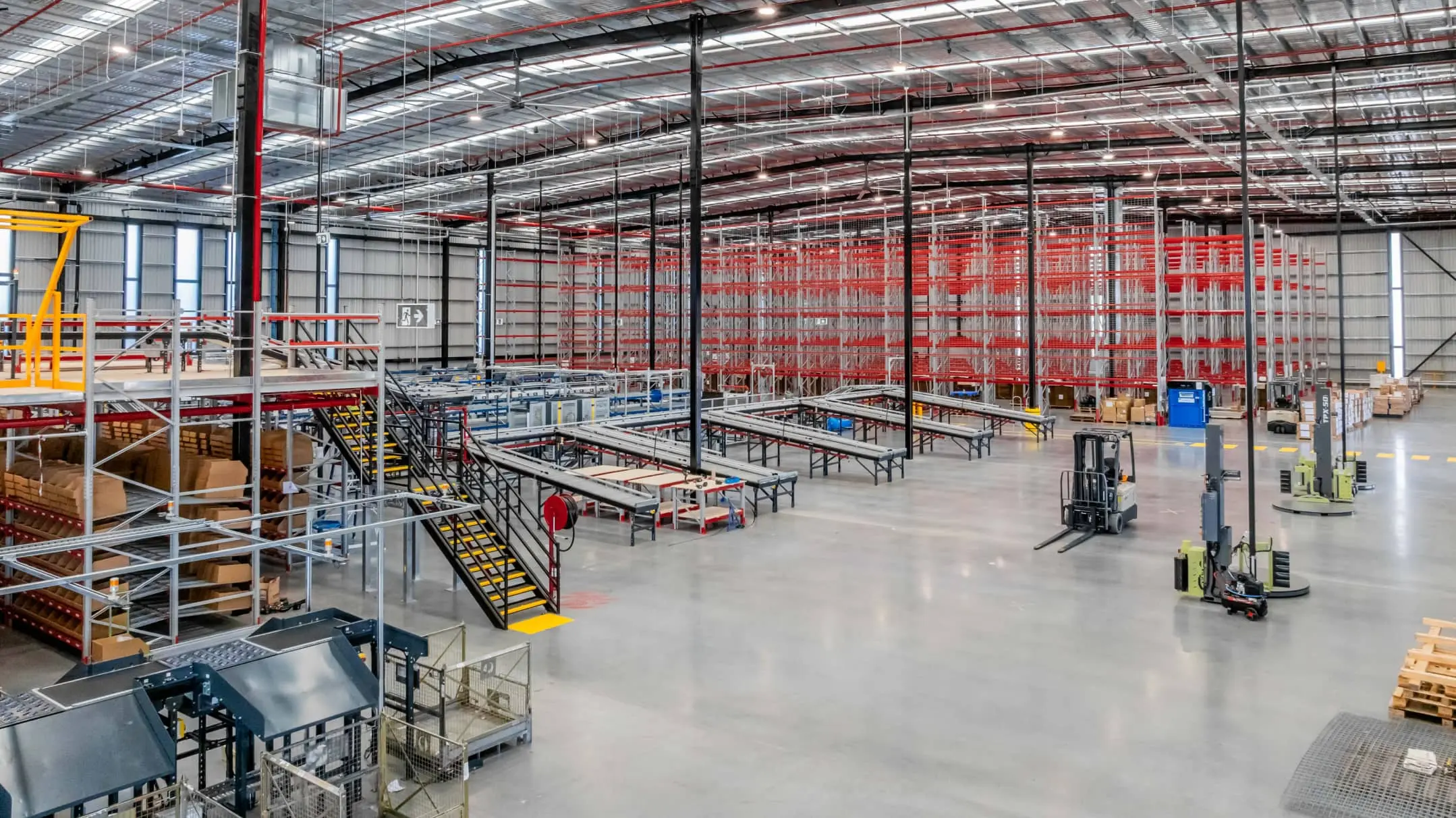
Adding more racking can increase capacity. That doesn't automatically make a warehouse more efficient.
In fact, squeezing additional storage into an already busy warehouse can create new bottlenecks if it limits access, increases travel distances or makes picking more complicated.
The better question isn't, How much more can we fit?
It's, How easily can people access what they need?
Sometimes the answer is relocating fast-moving inventory. Sometimes it's replacing storage systems that no longer suit the products being stored. In other cases, it's making better use of vertical space that's been sitting empty for years. Our guide on “How to maximise storage space in a modern warehouse?” explores practical ways businesses can unlock additional capacity without expanding their footprint.
Efficiency comes from reducing unnecessary effort, not simply increasing capacity.
We've seen layouts gain storage capacity while losing efficiency. Access became tighter, travel distances increased and picking slowed as a result. Others achieved better results by removing storage in the right places, creating clearer traffic flow and improving access to frequently handled inventory. It's a reminder that warehouse efficiency isn't measured by how much you can fit inside the building. It's measured by how well the operation performs every day.
Warehouses Evolve. Your Layout Should Too.
Very few warehouses operate the same way they did five years ago.
Product ranges expand. New SKUs are introduced. Seasonal inventory comes and goes. Customer expectations shift, and with them, picking priorities and order volumes. Some businesses grow through acquisition, bringing together inventory and processes that were never originally designed to work in the same space.
The warehouse adapts one decision at a time. A few extra pallet locations are added. Overflow stock is stored wherever there's room. Fast-moving products are relocated to solve an immediate problem. Individually, those decisions often make sense.
Over time, though, they can leave the warehouse working against the operation rather than supporting it.
That's why reviewing warehouse layout shouldn't only happen when space runs out. It's an opportunity to ask whether the storage system still reflects the way the business operates today. Are high-demand products positioned where they're easiest to access? Does the current layout support today's picking patterns? Is there unused vertical space that could be put to better use?
Sometimes the most valuable improvement isn't adding more storage. It's redesigning what's already there so the warehouse works as efficiently as the business it supports.
The Biggest Inefficiencies Are Usually the Ones Nobody Notices
Every warehouse develops habits over time.
A temporary overflow area becomes permanent. New product lines are added wherever there's room. Picking routes grow longer because nobody has stopped to rethink the layout.
Eventually, those workarounds become part of the daily routine.
That's why stepping back and reviewing the warehouse as a whole can be so valuable. The goal isn't to redesign everything. It's to identify the small frustrations people have learned to work around.
Removing those points of friction often has a bigger impact than adding another row of racking.
Storage Should Support the Way You Work
The right storage system depends on more than available floor space.
It should reflect the products being handled, the frequency they're accessed and the way inventory moves from receiving through to dispatch.
For some operations, that may mean selective pallet racking that provides quick access to every pallet. Others may benefit from modular shelving, Cantilever racking, Mezzanine floors or high-density storage systems that make better use of the existing footprint.
The objective isn't to install more equipment. It's to choose storage that supports the way the warehouse actually operates. A warehouse storing long products has different requirements from one handling cartons or high-turnover palletised goods. Choosing the right solution starts with understanding how inventory moves today while leaving enough flexibility for tomorrow.
Think About Automation Later, Not First
Automation has an important role to play in modern warehouses, but it's rarely where we'd begin.
Technology performs best when it's supporting a well-organised operation. If workflows are already inefficient, automation tends to expose those weaknesses rather than solve them.
That doesn't mean waiting until every process is perfect before introducing automation. It means understanding which problems technology is there to solve. If delays are caused by poor inventory placement, inefficient traffic flow or storage systems that no longer suit the operation, those issues are worth addressing first. Once the fundamentals are in place, automation can build on them instead of working around them.
In our experience, businesses usually see the greatest value when they improve layout, storage and workflow first. Once those foundations are in place, automation becomes much easier to introduce and delivers stronger long-term results.
Build a Warehouse That Can Adapt
Warehouses don't stand still.
Customer expectations change. Product ranges expand. Inventory levels rise and fall throughout the year.
Storage systems should be able to evolve with those changes rather than lock the warehouse into yesterday's way of working.
The storage decisions you make today should leave room for those changes tomorrow.
Flexible storage systems allow businesses to adjust layouts, increase capacity and introduce new technologies without starting from scratch every few years. That flexibility can be just as valuable as the storage itself.
Better Efficiency Often Starts with a Different Question
When warehouse performance begins to decline, it's natural to assume the building has become too small.
Sometimes that's true.
Just as often, the opportunity lies inside the four walls you already have.
Taking a fresh look at warehouse layout, storage systems and everyday workflows can uncover improvements that create more capacity, reduce wasted movement and support future growth without expanding your footprint.
That's why the most successful warehouse improvements often begin with questions rather than equipment. How is inventory moving? Where is time being lost? Which processes have gradually become more difficult than they need to be?
If you're planning to improve your warehouse layout or storage systems, contact our team to discuss a solution tailored to your operation.